

Cuenca is the venue for the gastronomic congress
If when you hear about Jerez wines you think of a cloyingly sweet wine, the kind your grandmother would take out of the cupboard after lunch or at Christmas to go with shortbread, you need us to tell you about it, and maybe it's time to change your mind.
Because Sherry can be dry, saline, delicate, intense, complex, or deliciously sweet. It can accompany olives, prawns, a mushroom stew, or a chocolate dessert. And the most surprising thing is that such different wines can come from the same grape variety.
Of the International Sherry Week 2026 is celebrated from November 2nd to 8th, A week dedicated to discovering, sharing and enjoying wines that, despite having centuries of history, still manage to surprise us.
And here at Entre Cepas, Sherry Week 2026 seems like a great excuse to talk about them. Although, to be honest, we don't really need much of an excuse to open a good Sherry.
The International Sherry Week is celebrating its thirteenth edition and has become a major international celebration of the wines of the Jerez region.
For seven days, wineries, restaurants, wine shops and enthusiasts from all over the world will participate in tastings, pairings, meetings and gastronomic experiences.
This year, during Sherry Week 2026, activities are planned in more than 30 countries, demonstrating that interest in these wines goes far beyond our borders.
And it is certainly curious: we have internationally admired wines very close by, yet they are still largely unknown to many Spanish consumers.
Perhaps because for years we have associated Jerez with certain customs, moments or generations.
Or perhaps because words like amontillado, palo cortado or biological aging They sound complicated when nobody explains them to us over a drink.
We're going to try to fix it.
There's something I always like to mention in tastings: to understand Jerez, more than memorizing names, you have to understand what happens in the process, over time.
Because a large part of their personality is formed during upbringing.
In the Jerez region we find two main aging methods that explain many of the aromas, colors and flavors of these wines.
Imagine a wineskin on whose surface a natural layer of yeast forms.
That layer is called flower veil and is responsible for what is called biological rearing.
In addition to protecting the wine from direct contact with oxygen, these yeasts transform some of its characteristics and give it very particular aromas.
Thanks to them, those memories of almond, bread dough, yeast and pungent notes that we find in finos and manzanillas appear.
The first time we explain this in a tasting, it usually surprises quite a bit.
Not all wines age simply by waiting inside a barrel.
In other wines, the veil of flor is not present during aging and oxygen participates in their evolution.
This is what we know as oxidative aging.
Over time, wines acquire more intense colors and develop aromas reminiscent of nuts, spices, fine woods, and other nuances that can become truly complex.
But the interesting thing is that these two parenting styles are not always separate paths.
There are wines, like amontillado, that go through both.
And that's where one of the most fascinating stories of Jerez begins.
You don't need to memorize all the classifications. What's important is knowing what to expect when you pour yourself a drink.
Pale, delicate, with aromas of almond and yeast and a completely dry mouth.
Fino is one of those wines that surprises when served at the right temperature and accompanied by something to snack on.
A simple combination? Some good French fries, some olives, or some salted almonds.
You don't need to organize a sophisticated meal to enjoy it.
First it ages protected by the veil of flor and then continues its journey through oxidative aging.
The result is a dry wine, with aromas of hazelnuts, spices and a complexity that invites you to pause for a moment before the next sip.
It's one of my favorite styles for explaining how a wine can change depending on its aging.
It can be magnificent with some sautéed mushrooms or a cured cheese.
Herein lies one of the great misunderstandings.
Many people associate dark color and mature aromas with sweetness.
But a traditional oloroso is a dry wine.
It has body, structure, and aromas that may remind you of nuts, fine woods, and spices.
It's a great accompaniment to stewed meats, game dishes, or strong cheeses.
And it's also a good example of why we shouldn't judge a wine solely by its color.
If there is one wine that generates curiosity when it appears in a tasting, it is palo cortado.
It combines an elegant and delicate nose with a mouth of greater structure and depth.
Its history is linked to the classification and evolution of wines in the winery, and although much has been written about its supposed mystery, there is no need to wrap it in legends to enjoy its uniqueness.
The best thing to do is try it and discover what makes it different.
For those who prefer milder and sweeter flavors, the cream offers a completely different experience.
It is a fortified wine, usually made from an oloroso sherry to which sweet wine is added.
It has an enveloping texture and may feature notes of raisins, nuts, and caramel.
It can be a delicious combination with certain blue cheeses or nut-based desserts.
And we would still have to discover the Pedro Ximénez, the Moscatel and the Manzanilla wines.
Do you understand now why we said that Jerez is not a single wine?
If there is one thing worth highlighting, it is the enormous gastronomic potential of these wines.
We're used to choosing white wines for fish and red wines for meat. And while that classification can be helpful, it leaves out many interesting combinations.
A fino sherry pairs wonderfully with salty foods and fried dishes. A manzanilla sherry is a superb accompaniment to prawns. An amontillado sherry can transform a mushroom dish, and an oloroso sherry can be a great complement to a slow-cooked stew.
The key is to try.
At Entre Cepas we especially like that moment in a tasting when someone tries a wine, then a small bite and then tries the wine again.
And suddenly the expression on his face changes.
There's not much to explain. The combination has just done its job.
This year we also want to join the Sherry Week 2026 celebration from Entre Cepas.
He On Friday, November 6th, at 7:30 pm, we will hold our tasting «The colors of Jerez», an experience to discover how different aging methods result in wines with completely different personalities.
It will be an opportunity to get closer to fortified wines without needing prior knowledge, understand what lies behind each style and, above all, enjoy them.
Because it's one thing to read that a fino sherry has biological aging, and quite another to recognize its aromas while tasting it.
And that's what we like to do in our tastings: learn, compare, ask questions, and share discoveries.
No exams, no impossible words, and no fear of making mistakes.
Sherry Week is a celebration, but also an invitation to look at wines that are part of our wine heritage with different eyes.
Wines that have managed to maintain their own identity, that require time, knowledge and a lot of work in the winery, and that offer a diversity that is difficult to find elsewhere.
You don't need to become an expert or learn all the types of parenting.
Just start with a drink.
Perhaps a chilled fino with an aperitif. An amontillado to accompany some mushrooms. Or an oloroso to surprise us during a meal.
And who knows, maybe you'll discover that that wine you never thought to order ends up becoming one of your favorites.
Just in case, we'll keep putting glasses on the table.
Happy Sherry Week 2026!
Cuenca is the venue for the gastronomic congress

From fino to oloroso, the wines of
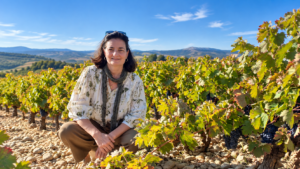
We love walking through the vineyard and getting to know it.
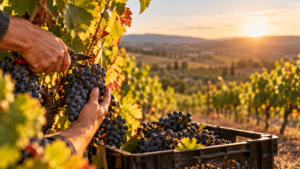
The 2026 harvest has left us