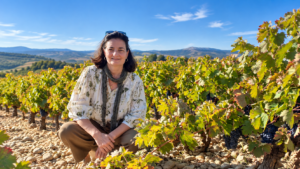
We love walking through the vineyard and getting to know it.
We love walking through vineyards and exploring the wine-making process. We enjoy the journey while we're there, and we also savor it when we return home and open another bottle.
My recent visit to the Arlanza Designation of Origin, forming part of a group of the Spanish Association of Wine Journalists and Writers (AEPEV), It has allowed me to put a face to a few label makers I already knew and discover new makers and products.
We were invited to explore a wine-producing region, its landscapes, its wineries, and its wines. And while all of that was well worth it, what I remember most fondly is the people.
Those who welcomed us, dedicated their time to us, shared their projects, and helped us understand what it means to make wine in this corner of Castile and León.
There's one thing I've always been clear about since I started in this world: to truly understand a wine, it's not enough to just taste it. You have to go to the place where it's born and listen to those who make it possible.
And Arlanza has given us that opportunity.
The Arlanza Designation of Origin is located in Castile and León, between the provinces of Burgos and Palencia, following a large part of the valley of the river that gives it its name.
It is a land of contrasts, where vineyards share the landscape with cereal fields, moors, small villages and a historical heritage that forms part of the personality of the region.
The designation has more than 450 hectares of vineyards and the Regulatory Council directory includes 27 wineries and producers.
We're not talking about one of Spain's major producing regions. And that's precisely where part of its charm lies.
In Arlanza we find projects of different sizes, old vineyards, family wineries and producers who have committed to recovering the winemaking potential of a territory that deserves much more attention.
Arlanza has had to find its place in the shadow of such a powerful and renowned neighbor as Ribera del Duero. And it's not always easy to be heard when you share territory with a designation that has achieved such renown, both within and beyond our borders. But it would be a mistake to confuse recognition with quality, because Arlanza has its own identity, history, and more than enough to claim its own place on the Spanish wine map. It's not about competing, but about discovering that there is so much more to explore.
Although the designation of origin was recognized in 2007, its winemaking tradition dates back to the Middle Ages, when monasteries played a fundamental role in the expansion of vine cultivation.
Then came the abandonment of many vineyards and the loss of rural population.
Today, preserving and restoring part of that heritage is also a way of keeping the territory alive.
And, after getting to know him a little better, that effort takes on a special meaning.
One of the first things that stands out is the influence of altitude and climate.
We are in a continental climate zone, with cold winters, hot summers, and significant temperature differences between day and night.
These conditions, along with the diversity of soils and orientations, influence the ripening of the grapes and help to explain the character of their wines.
The main protagonist is the Tempranillo, known here as Tinta del País.
And it is especially interesting to see how a variety that we know so well can express itself differently when the territory changes.
The designation also includes other red varieties, such as Garnacha, Mencía, Cabernet Sauvignon, Merlot and Petit Verdot, as well as white varieties such as Albillo and Viura.
This diversity, combined with the different ways of working in their wineries, allows you to find very different styles.
And that's something we were able to verify during our visit.
One of the great highlights of the trip was the opportunity to taste wines from nine projects within the appellation.
Septien Wineries, Decorus Wineries, Sinceros Wines, Amcotur, Sierra Wineries, Lerma Palace, Buezo, Valdesneros Lordship and Winery Lerma.
Nine names that reflect the diversity of this region and that allowed us to approach different interpretations of the same territory.
Each winery makes its own decisions: how to work the vineyard, when to harvest, what varieties to use, or what style of wine it wants to produce.
And those decisions end up making differences that are worth discovering in the cup.
As a sommelier, one of the things I enjoy most about these encounters is precisely that possibility of comparing, asking questions, and broadening my perspective.
We stepped outside our usual references and discovered wines that may not be so well known to the consumer, but that have a lot to offer.
A magnificent way to remind us that the world of wine is too big to always drink the same thing.
There is something that doesn't appear in wine technical sheets, but that can make you remember a trip for a long time: how they made you feel.
That's why I want to dedicate a few special words to those who accompanied us.
A Elisa and Ramiro, from the Regulatory Council of the Arlanza Designation of Origin, Thank you for the warm welcome and for helping us discover a region that has so much to offer.
A Rubén, from Valdesneros Wineries and Luis, from Decorus Wineries for sharing their projects with us and bringing us closer to the reality of those who work to give visibility to the wines of this land.
A Buezo Wineries, They not only showed us their hospitality but also acted as perfect hosts during lunch. Around a table, with a few bottles uncorked, great conversations arise… and you also learn a lot about wine. It's almost always precisely those moments that are best remembered.
Behind each of these encounters there is something that deserves to be recognized: time, dedication and a desire to share.
And that, when someone organizes a visit for wine professionals, is extremely valuable.
One of the things that makes me reflect the most on these types of trips is the role that small wineries play in rural areas.
Because making wine in an area like Arlanza involves much more than just producing bottles.
It means preserving vineyards, recovering plots that could be abandoned, generating economic activity and helping villages maintain their identity.
An interesting example is Bodegas Decorus, a project that has opted to recover old vines and work with a philosophy of respect for the environment.
Bodegas Valdesneros also represents that desire to recover and give continuity to the winemaking tradition of the Palencia Cerrato region.
These initiatives remind us that viticulture can play an important role in the future of many rural areas.
Of course, it's not all romance. Behind it all lies a lot of effort, investment, difficulties, and a tough market where carving out a niche isn't always easy.
That's precisely why I believe it's worthwhile to learn about these projects and give them visibility.
Being part of a visit like this with colleagues from AEPEV is an opportunity to continue learning.
And not just about wines.
It allows us to hear different points of view, learn about projects that we might not have discovered otherwise, and better understand the reality of wine-growing regions.
I want to end this short tour with a sincere thank you.
To the Arlanza Designation of Origin Regulatory Board, Thank you for inviting us and making this meeting possible.
I take away the memory of a territory that deserves to be discovered, of wines that I will continue to keep very much in mind and, especially, of people who work with enthusiasm to make known what they have in their hands.
At Entre Cepas we always maintain that one of the greatest pleasures of wine is discovering places, varieties and producers that we do not yet know.
This trip has reinforced that idea for me.
Because there are wines that we like, wines that surprise us and wines that, when we taste them again, take us directly to a place and some people.
I am sure that, from now on, when I open a bottle of Arlanza, I will remember much more than its aromas and flavors.
Thank you for making us feel so welcome.
We love walking through the vineyard and getting to know it.
The 2026 harvest has left us
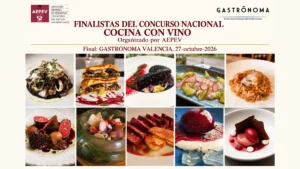
Discover the ten finalists of the Cooking Competition

A unique opportunity for the sector of