Learning to taste wine: a different way
By Mar Sánchez
Many containers, with varying degrees of success and consumer acceptance, are used to hold wine. The truth is that technology has advanced considerably since the animal skins and clay amphorae used in ancient times, and ongoing research continues to find the perfect container. Ensure optimal preservation and maintain the qualities of a wine for as long as possible, while also facilitating storage.to and transport of the product.
With this intention, packaging such as tetra brik, bag in box, aluminum cans, plastic containers (PET) or the relatively well-known tetra glax, a vitreous coating whose opacity protects the aging of wine and whose flexibility absorbs vibrations, burst onto the market.
The wine industry 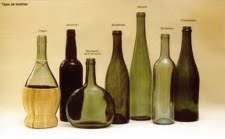 It tries to adapt to market evolution by offering packaging and formats that may be attractive.Wine bottles are designed to appeal to a specific audience, but not all packaging is suitable for all types of wine. The most widely used and accepted option worldwide for quality wines remains the glass bottle, so let's focus on that.
There are many types of bottles depending on their color, size, or shape, and it's very important to choose the most suitable one for each wine. For wines intended for aging, the glass used is very dark, almost opaque, while for young whites and rosés, clear or colorless glass can be used.
Some bottles are named after their place of origin, while others are named after the wine they contain. Among the most common are:
Regarding dimensions, the most commonly used bottle is 75 cl., but it is important to note that the evolution of the wine is slower as the size of the bottle increases, therefore this directly influences the preservation and aging of the wine.
The half-liter bottle is mainly used for packaging sweet wines, and there are other formats whose curiosity lies not only in the volume but also in the name:
Learning to taste wine: a different way
At Entre Cepas we are very much about defending

From January 26th to 28th
If you enjoy discovering wines and restaurants with