At the IWC Industry Awards Spain 2026
Rosé wines. Domaines Ott, the best in the world
At the end of the 19th century, a young Alsatian agricultural engineer, Marcel Ott, found inspiration in France. Provence captivated him, and he decided to settle there to produce quality wines from noble grape varieties. This was a truly challenging task, given that phylloxera had devastated most of the vineyards, and the vines would have to be replanted.
Today, more than one hundred years later, the fourth generation, represented by Jean François Ott and his cousin Christian, have the honor of being the best rosé winemakers in the world.
In ENTRE CEPAS We have had the privilege of sharing a conversation with François and learning firsthand about his origins and his projects.
EC.- In 1896 your great-grandfather, Marcel Ott, started the project. More than a hundred years later, how do you feel about growing the family legacy?
JFO.- Well, I feel really good. I think it's very important to know history, our origins, to understand how we got here.
My great-grandfather arrived in Provence with the idea of creating quality wines; however, much of the vineyard had been devastated by phylloxera. The local farmers were focused on quickly recovering production and prioritized quantity over quality. My great-grandfather, however, was clear about his objective from the beginning and went against the grain. He acquired plots in prime locations and replanted the best clones of Grenache, Mourvèdre, Cinsault, and Syrah.
The initial idea was to produce white wines, but the recognition obtained with his first rosé wines led him to focus most of the production on this type of wine.
Today, although our focus is on our country, we are aware that things change and that we must also look at other countries.
EC.- Three estates: Chateau De Selle, Clos Mirelle and Chateau Romason. Tell us about them.differences between them
JFO.- Yes, certainly, there are some differences between them.
Château de Selle was the first property acquired by Marcel Ott in 1912, having belonged to the Counts of Provence in the 18th century. It is part of the Côtes de Provence AOC. Located on inland slopes with limestone soil, it maintains a fairly constant temperature. This creates a microclimate with mild winters and springs and a hot, dry summer, always with abundant sunshine. The average age of the vines is around 20 years, and the wines are a blend of different varieties (Cabernet Sauvignon, Grenache, Cinsault, and Syrah). This estate produces red wines and our renowned "Cour de Grain" rosé wines.“
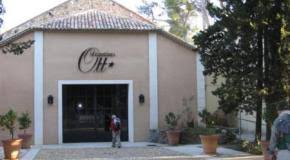
Clos Mirelle was acquired by my great-grandfather in the 1930s. It is situated on the coast, bathed by the Mediterranean, which gives the wines a very distinctive character. The humidity is noticeable both morning and night. It is also located within the Côtes de Provence AOC. The estate includes a building constructed by Benedictine monks in the 18th century. The average age of the vines is about 16 years, and the soils are clay. This is where we produce our white wines and our Cour de Grain rosé wines.“
ChÂteau Romasan comprises 74 hectares of vineyards and was acquired in 1956. Extensive work was undertaken to reorganize the small plots into terraces. The 18th-century building was also restored. Located in the Bandol AOC, the vineyards enjoy a warmer climate and poorer soil. The vines have an average age of 25 years, and the primary grape variety is Mourvèdre. We produce Cour de Grain rosé wines as well as red wines. These are wines with great character, reflecting the unique terroir.
EC.- Your work philosophy is based on respect for the landscape and the environment, without the use of chemical products. What are you trying to achieve with this?
JFO.- One thing all our vineyards have in common is that we focus our work on the vines year-round, across all the different processes. We don't use chemical products because we don't need them and because we believe that the plants transfer everything they absorb through their roots to the fruit, which would be harmful. All our fertilizers are natural, as are the treatments we apply to any diseases the vines may contract.
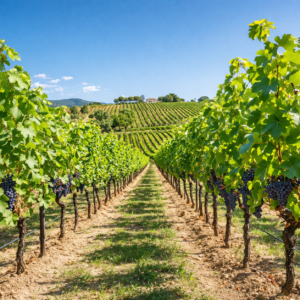
During autumn and winter, the soil is enriched with natural compost and the vines are pruned. In spring, the soil is plowed and excess buds and leaves are removed to avoid overloading the plant. Around May, the vines are trained on wire trellises to ensure uniform growth and provide shade for the ripening fruit. The harvest is done by hand over approximately 20 days in mid-August. Selection takes place in the vineyard, and a second selection is made at the winery. High quality standards mean that in some years, production is reduced by half.
Fermentation takes place in stainless steel tanks and then the wine is transferred to barrels. We work with the lees to give the wine more roundness and we... tasting We'll wait until around February to finalize the vintage blend. Then we'll bottle it... and enjoy!
EC: In 1930, your father, René Ott, created an original bottle that became the hallmark of your winery. A rounded bottle that evoked the Provençal landscape and the shape of ancient amphorae. What did the creation of this bottle mean for the winery?
JFO.- Initially, the wine was sold to our distributors in small barrels that were refilled weekly. With this system, the end customer couldn't identify the wine or associate it with the winery that produced it, and we also ran the risk that these barrels could be refilled with other wines.
We were very proud of the product we made and wanted people to recognize it. You could say that's where a "marketing project" began. The most important thing, obviously, is to make a quality wine, but the packaging is also important. When people go to buy wine, they look at the bottle, the color, the shape, the label. To this day, our bottle remains our hallmark.
EC.- In 2004, the champagne house Louis Roederer acquired a majority stake in the company. How did this change of ownership affect the winery and production?
JFO.- Well, at first we asked ourselves a lot of questions: “What are we going to do?”, “Why this option?”… but we finally decided it was purely a business matter. Managing the company and making decisions became extremely complicated with a shareholder base of more than 20 cousins. Louis Roederer acquired the majority stake and centralized financial management and distribution, leaving the production side in my hands and those of my cousin Christian.
This allows us to create significant synergies between us because we have a thorough understanding of the production processes and they have a substantial distribution network. We already knew each other. We had worked together before, and we both need to trust one another.
EC.- Tell us about BY OTT. Is it a new concept? What are you looking to achieve with this line?
JFO.- We recently acquired 70 hectares near Chàteau de Selle and expanded production, resulting in BY OTT. It's a second product line. A fresher, more casual wine…
In its production we use our own grapes that do not meet the quality standards of our main wines and also grapes that we buy from small producers in the area.
We can say, graphically, that DOMAINS OTT It is “Haute Couture” and BY OTT “Prèt à porter”
At the IWC Industry Awards Spain 2026
When Garnacha speaks of history (

Wine is no longer just served
Discover what makes a wine special